
Shoes, inserts and orthotics
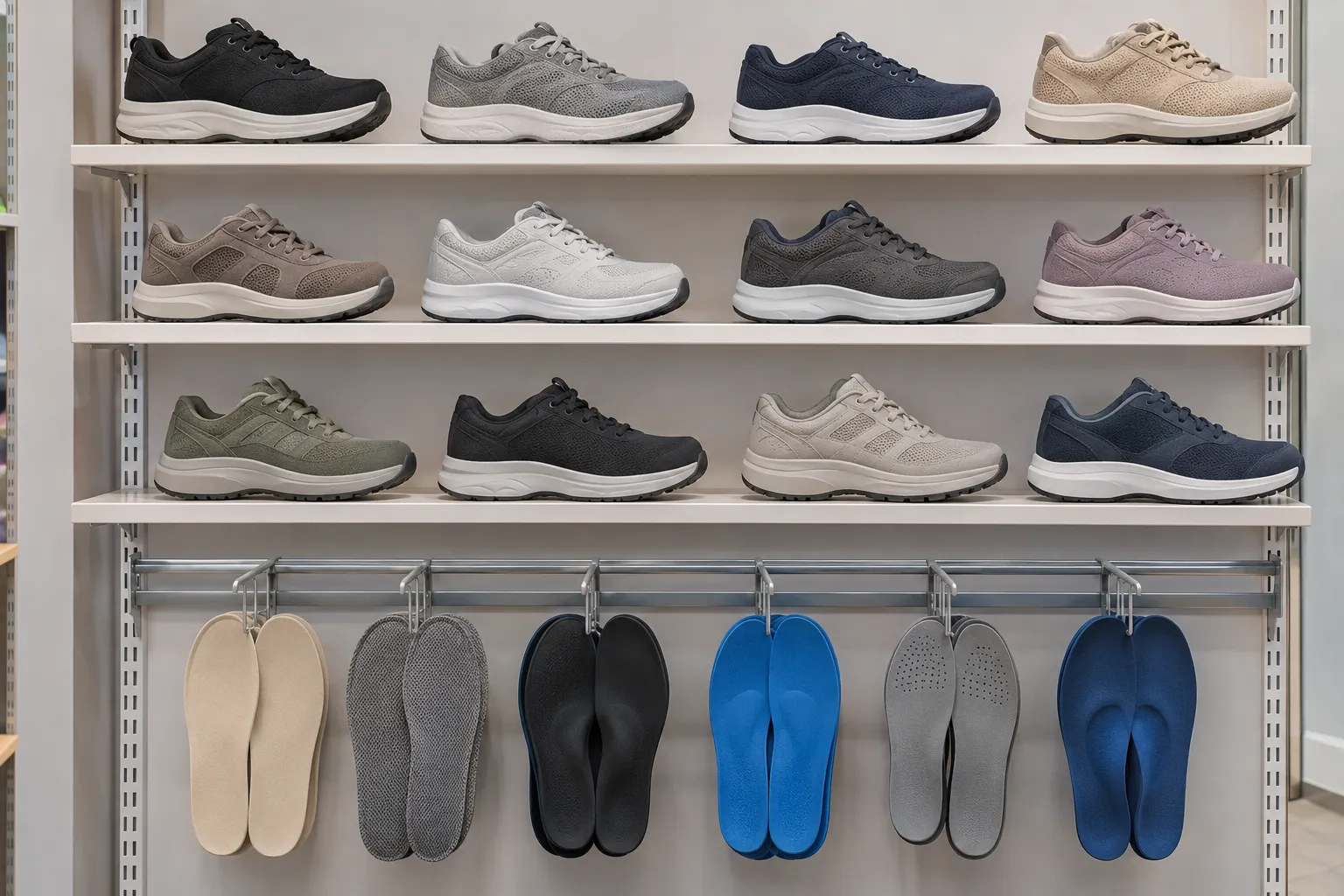
Shoe trouble is easy to wave off because it usually starts as a rub or an ache. The six questions below cover what to wear, what an insert can and cannot be, and which shoe questions deserve a closer look.
Six questions about what goes on your feet
- What makes a good running shoe? A routine question about picking a pair.
- How should a child's shoe fit? A routine question for parents at the shoe store.
- Can shoes that are too tight cause foot problems? A warning-sign question when a shoe leaves a mark or a sore spot.
- How are custom orthotics different from store insoles? A background question before you spend money on either one.
- Who actually needs custom orthotics? The question that separates a real need from a routine preference.
- How many years do custom orthotics last? A routine question about replacement.
How the shoe and the insert work as a pair
An insert only works if the shoe has somewhere to put it. In its back-to-school shoe shopping tips, Foot Health Facts (ACFAS) says the best shoes to buy are oxford, lace-up shoes that have enough depth for an orthotic insert, if necessary.
Orthotics also come in more than one form. Cleveland Clinic notes that you can get some custom orthotics as full-shoe inserts, so it helps to think about the shoe and the insert together.
For a wider view of the subject, the Foot Health Facts overview of orthotics is a companion to the questions above. If your trouble is a tendon problem rather than a fit problem, a leaflet from Kent Community Health NHS Foundation Trust on mid-substance Achilles tendinopathy covers that separate subject.
When the shoe has already done damage
If a shoe has already left a sore, go to foot sores and slow wounds, the nearest related page.